
Recent Program Features
We are proud to celebrate the success of our faculty, students and programs. We welcome you to learn more about our college through reading our recent features!
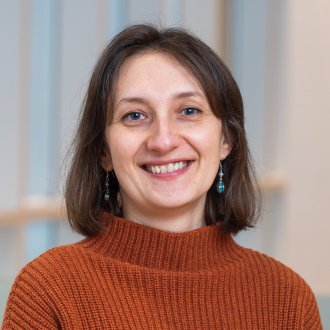
Halyna Hodovanets - Masters in Physics 2008
Halyna graduated from the Minnesota State University Physics Masters program in 2008. After Halyna graduated, she then attended Iowa State and earned her PhD in physics. After an Assistant Professorship in the Physics and Astronomy Department at Texas Tech University, she started began as Assistant Professor of Physics at the Missouri University of Science and Technology in January 2022.
Read more about their experience at Minnesota State University below.
Full Story + Show Less –Halyna graduated in 2008 from the Physics and Astronomy department with her Masters in Physics. She came to Minnesota State University following the recommendations of her friends and colleagues, knowing she wanted to do physics because she had "always been interested in how things work." While here, she really enjoyed her interactions with other graduate students, staff, and faculty members and says the "staff and faculty were especially helpful in helping me feel like home." Throughout her time at Minnesota State University she shared the TA office with many graduate students and our interactions are very cherished by me. In particular, she thanks "Dr. Igor (Kogoutiouk) for his immense help and advice with every aspect of life," and adding that "without him I would not be where I am today."
Speaking to the preparation for her career beyond Minnesota State University, "as a TA for the labs and I found them very well written and thought through. The courses taken at Minnesoat State University, Mankato prepared me very well for the qualifying exam at ISU." Specifically, she cites her advisor Dr. Youwen Xu's supervision in setting her on her path in condensed matter physics. She is "grateful, since through the research with her I realized that that is what I like to do. I am especially grateful to her for being very strict and believing in me."
After Halyna graduated, she then attended Iowa State and earned her PhD in physics. Now, Halyna is an assistant professor in the Physics and Astronomy Department at Texas Tech University.
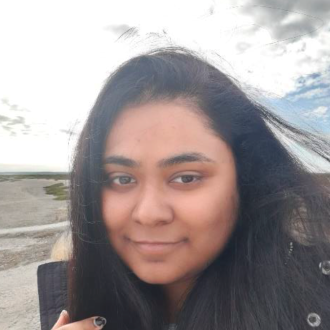
Raka Paul - Masters in Physics 2019
Raka graduated in 2019, and moved to Sweden to begin a PhD program in physics at Stockholm University. Read more about their experience at Minnesota State University below.
Full Story + Show Less –Raka graduated in 2019 with an MS in Physics, completing a thesis under the supervision of Dr. Dall'Asen. Upon graduation, she moved to Stockholm University where she begin a PhD program in physics studying the properties of dust grains like fullerenes and PAHs which are found in abundance in the universe and essentail for understanding a number of fundamental open questions in astrophysics.
She describes her research at Stockholm as focused on: "...understanding the interaction process and charge transfer mechanism between oppositely charged molecules, at the DESIREE cryogenic facility at Stockholm University’s physics department."
Of her time at Minnesota State University, Raka says "Minnesota State University has been a great catalyst and big leap forward toward achieving my current position. The faculty at Physics department, especially Dr. Brown, Dr. Xu and Dr. Dall’Asén have been the guiding and shaping factors, both in their teaching and mentoring skills. In the span of my masters’ studies, interaction with the faculty, my peer and the general work environment of a TA at the department have all made me a better physicist than when I started."
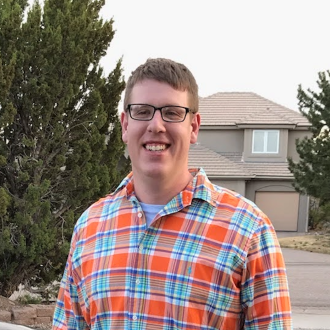
Christopher Prokop - Bachelors in Physics, 2011
After graduating with his Bachelors from Minnesota State University in Physics and Chemistry, Chris completed his PhD in 2016 at Michigan State University. Read more about his experience at Minnesota State University and beyond here.
Full Story + Show Less –Christopher graduated in 2011 with a BS in physics and in chemistry. After graduation from Minnesota State University, he earned his PhD in Nuclear Chemistry from Michigan State University in 2016 and began working at Los Alamos National Laboratory (LANL) as a post-doctoral researcher in Physics Division. As a post-doctoral researcher Christopher studied neutron-capture reaction cross sections and neutron-induced charged particle reaction cross sections. In spring of 2017 he was awarded a Director’s Post-doctoral Fellowship with his research focused on investigating neutron capture on 65Cu for s-process nucleosynthesis. In spring of 2019 he was converted to permanent staff in Physics Division, and then in fall of 2019 took over as instrument scientist for FP90L at the Los Alamos Neutron Science Center (LANSCE), and as the LANL principal investigator for the Neutron Induced Fission Fragment Tracking Experiment (NIFFTE) collaboration. His current research is focused on precision measurements of neutron-induced cross-section ratios of the major actinides with the NIFFTE collaboration as well as the application of nuclear science techniques to a variety of problems in support of LANL mission. Christopher is also very involved with the development of digital data acquisition and computing infrastructure. Of his time at Minnesota State University, Chris says: "The undergraduate research I performed with Dr. Roberts in MNSU’s applied nuclear science laboratory laid the foundation for the fundamentals of the nuclear science I perform today, and the value of that experience cannot be overstated."
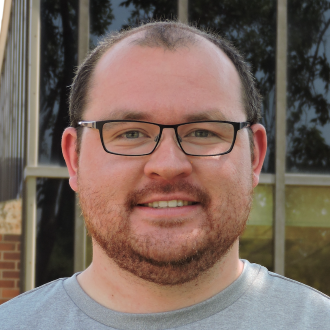
Thomas "TJ" Gehrman - Masters in Physics, 2019
Upon graduation, TJ moved to the University of Oklahoma where he is currently enrolled in the PhD program in astrophysics. Read more about his experience at Minnesota State University below.
Full Story + Show Less –TJ graduated in 2019 with an MS in Physics, focusing on applications in astronomy with his supervisor Dr. Paul Eskridge. Upon graduation, he moved to the University of Oklahoma where he is currently enrolled in the PhD program in astrophysics. At Oklahoma, he now teaches four lecture sections in astronomy and credits the experience he gained at Minnesota State University, Mankato teaching labs for his success there. TJ says his coursework at Minnesota State University, specifically his classical mechanics course, has been a real benefit for his PhD coursework.
As for why he was attracted to the MS program at Minnesota State University, TJ said there were a few reasons, but "mostly because there was an observatory and there was astronomy research being done. Therefore, I could perform research in astronomy," he says. He also appreciated the smaller department, which allowed him to get to know the faculty and staff more personally.