
Recent Program Features
We are proud to celebrate the success of our faculty, students and programs. We welcome you to learn more about our college through reading our recent features!

Unconventional Path: From Punk Band Tours to Higher Education
Austin Willette’s journey through higher education has been anything but traditional. From touring the country with a punk band to finding his passion in education, his path has been marked by unique experiences and a determination to create a better future for himself and others. Now, as a third-year undergraduate student at Minnesota State University, Mankato, Willette reflects on his journey and looks ahead to his aspirations in education as an English teacher.
Music has always been in his family, beginning with Willette’s grandfather who toured when he was younger. Willette, however, did not start getting into music until his senior year of high school, after an injury forced him to stop playing football. He actually found his first guitar for free in a dumpster and taught himself how to play.
Full Story + Show Less –During his senior year of high school, Willette had a friend in a metal band that needed a bass player. He decided to give it a try and learn as he went. He started playing shows at a small coffee shop on Saturdays and immediately fell in love. Willette shared that his academics improved because he was focused and kept himself busy with a new passion and purpose.
This group of friends transitioned into making punk music in his father’s basement and called themselves the 12th Avenue Band. Shortly thereafter, they started playing shows around the Minneapolis area. After opening once for a band out of Wyoming called Teenage Bottle Rocket, they got a call offering the opportunity to tour together throughout the country. They only toured with Teenage Bottle Rocket for a few months, but the band spent a total of two years traveling the country playing music.
Although music is no longer his main focus today, Willette still has that passion and plays solo music throughout the Greater Mankato area.
Following his time in the music scene, Willette worked other jobs, but none quite satiated his desire for something more fulfilling. It was during this time that he made the decision to pursue higher education, inspired in part by his sister and the band's bass player, both of whom attended Minnesota State University, Mankato.
Although he is an untraditional undergraduate student having started his college career at 21, Willette feels that no one looks at him differently. If anything, he says that it helps him focus more on school. With one year left in his undergraduate studies, Willette plans to pursue a Master's in Education and later a Ph.D., with the aim of working in higher education and fostering a love for English among students.
“I am a writer,” he says. “I love to write.” His hope is that he can help instill that same love for English and writing in the next generation of scholars. He has a passion to increase the percentage of males graduating both high school and college, specifically in higher education. “I want to be a mentor,” he says. “If I’m going to be a male teacher, I’m of course going to help [students of all genders], but those boys need someone to look up to. I’ll make sure they have someone to talk to.”
His experience in public speaking, gained from years of performing with his band, has made him comfortable addressing diverse audiences. Willette feels that his time spent touring and seeing different parts of the country has given him a unique perspective allowing him to connect well with students coming from various backgrounds and different cultures.
Beyond his academics, Willette quickly got involved in extracurriculars within his first semester on campus. He did not come into college with full intentions of joining Greek life, but early in the fall semester of his first year, a Phi Delta Theta member approached him on campus and invited him over that night. Willette immediately got along with the members and found himself going back every day. Shortly thereafter, he was asked to join their fraternity.
Joining Greek life at Minnesota State Mankato proved to be another pivotal decision for Willette, who states that it was “the best decision ever.” Phi Delta Theta ΦΔΘ has high educational standards that members must meet in order to maintain their membership and attend events. Willette credits Greek life as a motivating factor to succeed in school. He says, “It keeps you busy, keeps you on your toes. You have to have good grades and a good work ethic just to be in Greek life all together… Our education comes first. Always.”
One of the largest events in Greek life, Mavathon, is coming up on Saturday, Feb. 17. Willette invites everyone to attend the event or donate. “We raise a lot of money for Gillette’s Children’s Hospital,” he says. “Come dance, or dance horribly with us.”
Willette adds, “Community service is very important to us [Greek life]. We wouldn’t be here without it.” The event is open to all students, staff and community members.
Tickets to the event and information on how to donate
Big ideas and real-world thinking on campus and in the community.

Registration and Academic Records
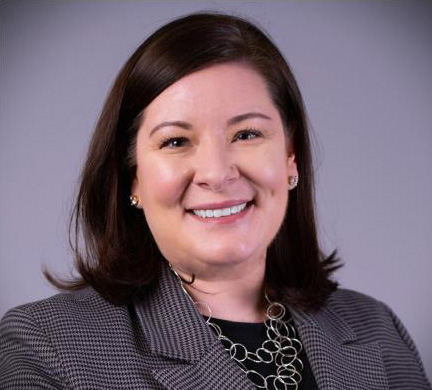
Amy Carmack, Director of Registration and Academic Records
"Since I started working in higher education, my north star has always been “How can I help to improve the student experience?” That single question motivates me when I go to work and it is what guides the work I do…even the behind the scenes work that people don’t usually see. It’s important to help create environments where students are successful, meet their goals, and have a fulfilling educational experience, and I’m thrilled to do that work at Minnesota State Mankato with an amazing team of student-centered professionals!"
More About the Department Show Less –Registration and Academic Records provide services to alumni, faculty, staff, and students regarding academic procedures and policies, curriculum, degree conferment, student records, registration and transfer evaluations. To learn more, visit the Registration and Academic Records website.
Honoring Cindy Janney's Remarkable Career and Retirement
Congratulations to Cindy Janney on her recent retirement after a long and impactful career at Minnesota State University, Mankato!
Cindy Janney began working at Minnesota State Mankato on July 1, 1996. She held various positions, including Associate Director of Residential Life, Interim Director of First Year Experience Office and Local President of Minnesota State University Association of Administrative Service Faculty (MSUAASF). She finished her career as Director of Residential Life, holding that position since December of 2002, and Dean of Students since July of 2019. “The thing that got me into this, and that is still the most fun and rewarding, is seeing students achieve things that they didn’t know that they could do,” Janney says.
Full Story + Show Less –Janney’s favorite aspects of working at Minnesota State Mankato included her interactions with Residential Life students and staff. As Dean of Students, she enjoyed solving problems not specified in procedures and rules and helping students and families not get lost in the complexity of the university during difficult situations. Managing student conduct has been a fun challenge, she says, especially helping students realize that student conduct is here to help rather than get them in trouble. Janney describes her work in the student conduct process as the opportunity to “help [students] refocus on what they want to accomplish and what will help them get there.”
Over the years, Janney has observed changes amongst incoming classes, including smaller family sizes and fewer students having previously shared a room with a sibling. She noted that there has been a clear decline in students’ ability to resolve conflict as first-year students, possibly due to less experience sharing spaces growing up. She also mentioned the impact that electronics and technology have had, highlighting the same success rate in roommate selection between students using social media platforms to find roommates and the selection of roommates by Residential Life based on the preference survey provided by the university.
Janney believes that one of her greatest impacts to the Maverick community was her willingness to show her own mistakes and accept others. This behavior has been visible within the Office of Residential Life, and she anticipates this positive culture to continue well beyond her time. She hopes that people feel cared for and able to work as part of a team. Without communication and teamwork, the larger efforts and construction projects—like building new residential buildings—would not have been completed successfully.
Some of the more visible impacts Janney has made on campus include her involvement in building renovations and new construction projects. She describes these projects as “fun and satisfying” because they changes the environment and have the opportunity to shape student behavior in positive ways. She shares that “it’s been fun to provide students with the spaces that meet their needs.”
Janney describes the sense of community and teamwork within Residential Life as having an emphasis on being vulnerable with one another. She acknowledges that it is not always easy to do, but that they are most successful when a certain level of vulnerability is present. While working in Residential Life, Janney believes that “in order to show up as a human for students, we need to show up as a human to each other.” It is evident within Residential Life that there is an emphasis on communication, vulnerability and relationships with one another. Janney feels that this community helps them achieve extraordinary outcomes.
Just a week before retiring, Janney got to experience her favorite event of the year. On Tuesday, Jan. 9, an annual award ceremony took place for residential hall students in which students both give and receive awards for achievements they didn’t know they could do. For example, students received awards for having exceptional involvement, being a ray of sunshine, or for being the culinary master of Residential Life students. “The whole point of student affairs is out of classroom experiences that support students’ achievement in [the] classroom,” Janney says, and this event highlights some of those moments. The event concluded with Janney receiving the Bronze Pin award for the work she has put into helping Residential Life Student Leadership. Junior Sammy Higgins presented this award, saying that Janney was deserving because “she gave the conference staff the confidence to host the first Regional Leadership Conference 2022 within the Midwest Affiliate of College and University Residence Halls (MACURH) and the National Affiliate of College and University Residence Halls (NACURH).” Higgins added, “she has also made a large impact within my own life as a student leader, especially during COVID-19, in a time that students didn't and couldn't be involved on campus.” Janney has clearly made a lasting impact not only on the professional staff, but also current students.
While reflecting on her time at Minnesota State Mankato, Janney attributes her professional growth to breaking out of her own assumptions and seeing problems/issues in new ways, allowing her to move forward. She acknowledges that assumptions can be limiting in what she can accomplish and breaking out of these assumptions has allowed her to continue to serve students positively. She is particularly proud of her consultation with students on what University and Residential Life planning is, explaining where their money goes and being a good steward of student resources. She has seen the impact of her intentionality of residential hall student resources achieve outcomes that have positively benefited students as well as University enrollment.
In retirement, Janney plans to spend more time with family and friends scattered across the country and the world. She plans to continue part-time consulting work for the Minnesota State system, specifically in planning for the next 10-year food service contract. She shared that she is looking forward to only focusing on one task. In her reflection, Janney acknowledged the dedication of the people at the University. Her career is marked by a commitment to students, a willingness to adapt to changes and a passion for creating a positive and supportive Residential Life community. Although her time at Minnesota State Mankato has come to an end, it is clear the University will continue to see the positive aftereffects of her many years of great work and dedication long into the future.
We wish Cindy Janney the best in her retirement.
Big ideas and real-world thinking on campus and in the community.
Department Changes Heading into the New Year
If it wasn’t for the chill outside you wouldn’t know that it is December 6, 2023 as I write this. I always forget the impact of El Niño or La Niña and what it means for winter in Mankato. So far, it means no snow and mild temperatures. This change in the weather isn’t the only change going on at Minnesota State University, Mankato. There are several key positions and reporting lines that are changing that I think you would like to know about.
Full Story + Show Less –Leadership changes are happening at Minnesota State Mankato. Our long-time serving Vice President for Finance and Administration, Rick Straka, is retiring in February 2024. Rick has been a tremendous champion of the student experience and Student Affairs. From new construction to creating new student scholarships, Rick has built a foundation that will serve the university for decades. Dr. Lynn Akey, who started her career at Minnesota State Mankato in Student Affairs and was serving as our Vice President for Student Success, Analytics, and Integrated Planning is becoming the new Chancellor at University of Wisconsin-Parkside. Lynn was also a great champion of the student experience and wonderful partner for Student Affairs. Our Director of Residential Life, Cindy Janney, is retiring in January 2024 after a tremendous career in Student Affairs. Under her leadership two new residence halls, an off-campus apartment complex, a new dining hall, and millions in renovations have kept our campus beautiful and serving the needs of our students. Searches are underway to fill these positions, so watch for announcements of the new leaders this spring.
With all of these leadership changes, some reporting lines are changing as well. President Inch is focused on the university achieving our new strategic plan (https://president.mnsu.edu/vision-mission-and-values/strategic-directions/) and has made structural changes to ensure our success. Beginning in December 2023, the Office of Registration and Academic Records now reports to me as the Vice President. In February 2024, the Office of Financial Aid will also report to the Division of Student Affairs. Later this summer, the Office of University Scheduling and Conference Services will report to the Division as we attempt to grow our summer camps and conferences activity. To assist with supervising these changes, we are creating a new Assistant Vice President for Enrollment Management. This new leadership role will report to me and supervise University Admissions, Financial Aid, and the Office of New Student & Family Programs. A search will be conducted to fill this position in spring 2024. Finally, the great work of the Career Development Center will be reassigned in 2024 to the new Vice President for Student Success and Engagement. This provides a heightened presence of their work and how we can connect students and employers through a central effort at the university. The Career Development Center will be missed, but we look forward to seeing them achieve new heights.
As these changes are occurring, there is one other change we are making as a division. Since I arrived at Minnesota State Mankato, I have been the Vice President for Student Affairs and Enrollment Management while the division has been titled Student Affairs. Beginning immediately, we will be the Division of Student Affairs & Enrollment Management. This better reflects the scope and focus of our work.
Thank you for all of your support in 2023. Whether through your direct giving of scholarships and emergency grant support to your willingness to share your ideas and passions to help our students, we appreciate all you do for Minnesota State Mankato. At this time of celebration and reflection, I invite you to include a visit to our campus in 2024. I would like to hear more about your ideas to support the university, as well as share the latest news and changes. Until then, I wish you and yours the best this holiday season.
Yours in Maverick Spirit,
David P. Jones, Ph.D.
Vice President for Student Affairs and Enrollment Management
Big ideas and real-world thinking on campus and in the community.