Recent Program Features
We are proud to celebrate the success of our faculty, students and programs. We welcome you to learn more about our college through reading our recent features!
On the Rise: Esports
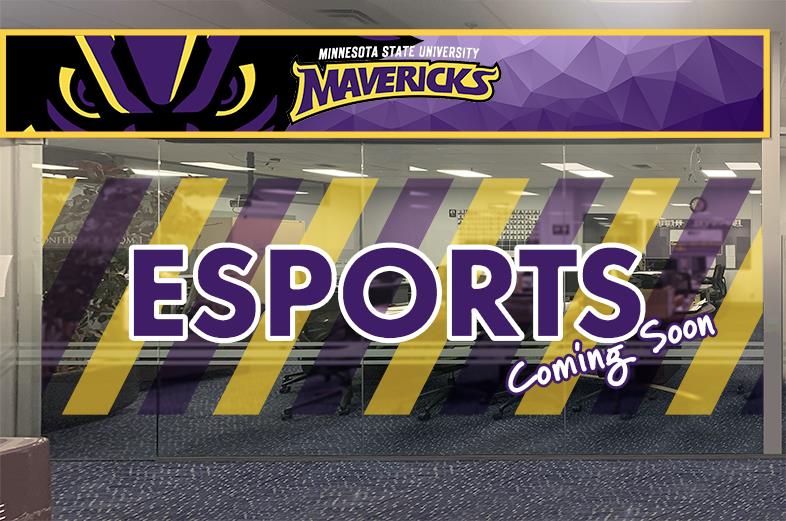
The Maverick Gaming Community is a student organized hub for gamers to connect and compete in more than 35 online games. The community has a channel on Discord, a communication application, for Maverick gamers to connect across numerous platforms like PC, XBOX, PS4 and Switch. By joining, students are able to find other Maverick gamers to play with or against and stay up to date on gaming opportunities through student organized events and tournaments.
Full Story + Show Less –Over the past two months, many campus activities have been cancelled or altered due to the current conditions of COVID-19. Since many students have been secluded in their off-campus residence or at home, most registered student organizations have been reduced to meeting virtually or postponing all events until the fall.
But one group in particular is thriving: The Maverick Gaming Community.
The Maverick Gaming Community is a student organized hub for gamers to connect and compete in more than 35 online games. The community has a channel on Discord, a communication application, for Maverick gamers to connect across numerous platforms like PC, XBOX, PS4 and Switch. By joining, students are able to find other Maverick gamers to play with or against and stay up to date on gaming opportunities through student organized events and tournaments.
According to Andrew Weinzierl, a member of the community, gaming has grown immensely in popularity over the last few years. “Having Esports on campus is an amazing way to connect students who might normally not be as involved and serves as an opportunity to make connections and friends throughout the college experience,” Weinzierl says. This is especially true during this unprecedented time, when it is harder to stay involved in the campus community and meet other people.
With the ever-growing popularity of gaming, Esports formed as a sporting competition through organized, multiplayer gaming. Jacquie Lamm, another gamer in the community, explains that “Esports is a competitive video game competition that can be played at the high school, college, casual or professional level. Most games are two teams, comprised of five to six team members, competing against each other towards winning a match.”
Despite current conditions, Esports is still seeing great support from Maverick gamers. The MavLoL (League of Legends) and the CSGO (Counter-Strike: Global Offensive) student organizations even held a successful tournament this past month titled MavRivals. Although they would have liked to have hosted it in person, the community was still able to provide quality entertainment through Twitch, a live-streaming platform for gamers, which is exactly what students need right now.
“The COVID-19 pandemic has been stressful and unpredictable; playing video games provides a sense of relief for many people, including myself, who want to pause the real world temporarily and immerse themselves in a virtual experience,” Weinzierl says. “Playing games from the comfort of one's home is a safe way to promote social interaction during these unprecedented times.”
The Maverick Gaming Community is proud to give students a sense of community during a time when they need it most. Thanks to current technology, students are able to still find support and some sense of normalcy during this time. As gaming continues to grow and gamers learn new skills, the community is excited to see what’s next.
“We hope to have a good turn out this summer…and are excited to see what comes next for Minnesota State Mankato and Esports this fall,” says Lamm.
All Staff Campus Update, June 2, 2020
President Davenport shares guidance from the Office of Higher Education on the governor's recent executive order, which allows non-critical businesses to begin re-opening on May 18.
(+) View Message (-) CloseColleagues,
We have received written guidance from the Office of Higher Education (OHE) on the governor's recent executive order, 20-56; the order that allowed non-critical businesses to begin re-opening on May 18. The new guidance is available on OHE's website.
The safety of our students and employees remain paramount. Our campus will be open and ready to welcome students in the fall, while adapting as necessary to safely serve them and provide them with an extraordinary education.
In addition to the safety focus, what does this new guidance mean for Minnesota State University, Mankato?
- First and foremost, services and courses that can be delivered remotely must continue to be delivered remotely.
- Employees who can work remotely must continue to do so.
- Prior to resuming in-person activities, our campus will need to establish a COVID-19 Preparedness Plan. Work on our University’s COVID-19 Preparedness Plan is underway, guided by a Return to Learn Advisory Committee led by Interim Provost Matt Cecil and Vice President Lynn Akey.
- The work of the Advisory Committee is focused on coordinating planning across a range of potential scenarios that is supported by action teams focused on five key areas: student learning; student life; employee return; financial sustainability; communications and enrollment; and partnerships.
- The work of the Advisory Committee is also support by a Pandemic Operations and Tactics team focused on precautions and steps that must be taken in the context of COVID-19.
In the days ahead you will receive additional communication providing guidance and steps that will need to be taken prior to the University increasing in-person activities and/or additional employees returning to the workplace.
Our eagerness to return to normal must be tempered by the overarching need to keep the campus community safe. Careful preparation is critical for our success moving forward. Thank you for your patience and understanding as we prepare for fall and beyond.
Stay safe.
Richard Davenport
President
Return to Learn Update, June 3, 2020
Weekly update from the Office of the Provost Weekly Announcements: We are looking forward to welcoming students back in the fall for a mixture of face-to-face and online instruction, as well as a new model of course delivery that we are calling FlexSync.
(+) View Message (-) CloseWe are looking forward to welcoming students back in the fall for a mixture of face-to-face and online instruction, as well as a new model of course delivery that we are calling FlexSync. FlexSync course delivery allows students to attend the same class either in-person or remotely via Zoom. Since we likely cannot host full classrooms due to social distancing requirements, FlexSync provides the flexibility to meet student and faculty needs and preferences as well as to adjust to evolving distancing guidelines related to the current health crisis.
We invite faculty to learn more about how FlexSync will work at www.mnsu.edu/flexsync. That site will be updated with additional updates and professional development information in coming weeks. In addition, IT Solutions has produced a video that visually describes how FlexSync would work in a class. You can view that on the Return to Learn Web site at www.mnsu.edu/returntolearn.
To deliver these FlexSync classes, we will need to add new health and safety protocols around social distancing, facility cleaning and personal protection. We are in the process of building a flexible plan that will allow the University to address additional issues as they arise.
Some key points of the plan to be aware of now:
- Under the direction of the Minnesota State Chancellor’s Office, we’re using a multi-phase planning timeline to address both immediate and long-range needs.
Phase 1 Short-term (May-August 2020)
Phase 2 Mid-term (August-December 2020)
Phase 3 Long-term (January, 2021-)
- Also under the direction of the Minnesota State Chancellor’s Office, we are looking at a planning scenario framework that allows us to shift as conditions change. We are currently operating as if Scenario B will be in place.
Scenario A No restrictions on movement or size of gatherings
Scenario B Restrictions on movement and size of gatherings, but no stay at home order in place
Scenario C Significant restrictions on movement and gatherings, with stay at home order in place for part or all of the semester
- The University has established the following Return to Learn Values to guide decisions made as we prepare for fall:
Keep our students, faculty, and staff healthy and safe
Assure that students can maintain progress toward their educational goals
Maintain the financial sustainability of the university
Pursue the strategic directions and priorities of the university
Advance toward achieving Equity 2030 goals
- We are in the midst of implementing the FlexSync hybrid learning model, which will allow us to be prepared for both face-to-face and online/remote learning in approximately 100 classrooms on campus.
Message to Students: "Return to Learn" Plan, June 3, 2020
Introducing Minnesota State Mankato's "Return to Learn" plan and the FlexSync model.
(+) View Message (-) CloseDear Students:
With this email, I want to introduce you to Minnesota State University, Mankato’s Return to Learn plan, which is the work we are doing to prepare to open campus this fall. We will be sending you weekly updates throughout the summer about how these plans will impact you and your return to school in August.
We are looking forward to welcoming you back in the fall for a mixture of face-to-face and online instruction, as well as a new model that we are calling FlexSync. FlexSync course delivery allows students to attend the same class in-person or remotely via Zoom. The flexibility allowed by FlexSync may be used throughout the semester to meet student needs and preferences as well as to adjust to evolving distancing guidelines related to the current health crisis.
I invite you to learn more about how FlexSync will work at the Return to Learn website, where you can also find more information about the plan and how it will come together over the coming weeks.
In order to make a return to campus work, the University will need to implement new health and safety protocols for all faculty, staff and students around social distancing, facility cleaning and personal protection. We are in the process of building a flexible plan that will allow the University to address additional issues as they arise and to keep our campus community safe.
I will share more details of the plan with you in coming weeks. In the meantime, here are some additional key points for you to be aware of right now:
- Under the direction of the Minnesota State Chancellor’s Office, we’re using a multi-phase planning timeline to address both immediate and long-range needs.
Phase 1 Short-term (May-August 2020)
Phase 2 Mid-term (August-December 2020)
Phase 3 Long-term (January 2021-)
- Also under the direction of the Minnesota State Chancellor’s Office, we are looking at a planning scenario framework that allows us to shift as conditions change. We are currently operating as if Scenario B will be in place.
Scenario A No restrictions on movement or size of gatherings
Scenario B Restrictions on movement and size of gatherings, but no stay at home order in place
Scenario C Significant restrictions on movement and gatherings, with stay at home order in place for part or all of the semester
- The University has established the following Return to Learn Values to guide our decisions as we prepare for fall:
- Keep our students, faculty, and staff healthy and safe
- Assure that students can maintain progress toward their educational goals
- Maintain the financial sustainability of the university
- Pursue the strategic directions and priorities of the university
- Advance toward achieving Equity 2030 goals
For more information about our efforts to prepare for your return this fall, please visit the Return to Learn website.
I look forward to seeing you again in August!
Sincerely,
Richard Davenport,
President