Recent Program Features
We are proud to celebrate the success of our faculty, students and programs. We welcome you to learn more about our college through reading our recent features!
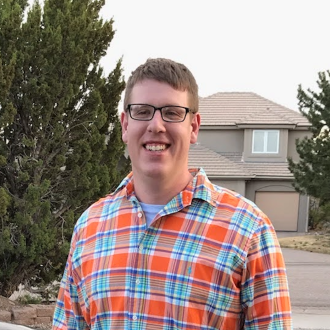
Christopher Prokop - Bachelors in Physics, 2011
After graduating with his Bachelors from Minnesota State University in Physics and Chemistry, Chris completed his PhD in 2016 at Michigan State University. Read more about his experience at Minnesota State University and beyond here.
Full Story + Show Less –Christopher graduated in 2011 with a BS in physics and in chemistry. After graduation from Minnesota State University, he earned his PhD in Nuclear Chemistry from Michigan State University in 2016 and began working at Los Alamos National Laboratory (LANL) as a post-doctoral researcher in Physics Division. As a post-doctoral researcher Christopher studied neutron-capture reaction cross sections and neutron-induced charged particle reaction cross sections. In spring of 2017 he was awarded a Director’s Post-doctoral Fellowship with his research focused on investigating neutron capture on 65Cu for s-process nucleosynthesis. In spring of 2019 he was converted to permanent staff in Physics Division, and then in fall of 2019 took over as instrument scientist for FP90L at the Los Alamos Neutron Science Center (LANSCE), and as the LANL principal investigator for the Neutron Induced Fission Fragment Tracking Experiment (NIFFTE) collaboration. His current research is focused on precision measurements of neutron-induced cross-section ratios of the major actinides with the NIFFTE collaboration as well as the application of nuclear science techniques to a variety of problems in support of LANL mission. Christopher is also very involved with the development of digital data acquisition and computing infrastructure. Of his time at Minnesota State University, Chris says: "The undergraduate research I performed with Dr. Roberts in MNSU’s applied nuclear science laboratory laid the foundation for the fundamentals of the nuclear science I perform today, and the value of that experience cannot be overstated."
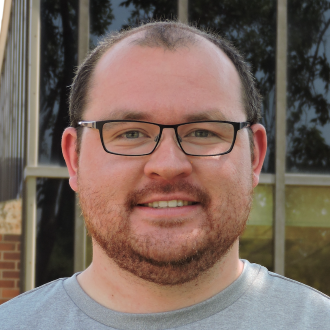
Thomas "TJ" Gehrman - Masters in Physics, 2019
Upon graduation, TJ moved to the University of Oklahoma where he is currently enrolled in the PhD program in astrophysics. Read more about his experience at Minnesota State University below.
Full Story + Show Less –TJ graduated in 2019 with an MS in Physics, focusing on applications in astronomy with his supervisor Dr. Paul Eskridge. Upon graduation, he moved to the University of Oklahoma where he is currently enrolled in the PhD program in astrophysics. At Oklahoma, he now teaches four lecture sections in astronomy and credits the experience he gained at Minnesota State University, Mankato teaching labs for his success there. TJ says his coursework at Minnesota State University, specifically his classical mechanics course, has been a real benefit for his PhD coursework.
As for why he was attracted to the MS program at Minnesota State University, TJ said there were a few reasons, but "mostly because there was an observatory and there was astronomy research being done. Therefore, I could perform research in astronomy," he says. He also appreciated the smaller department, which allowed him to get to know the faculty and staff more personally.
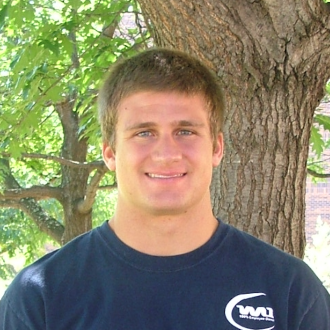
Paul Scaletta - Masters in Physics 2013
Paul graduated in 2013 from the Physics masters program at Minnesota State University and is now an engineer at Sheldahl Flexible Technologies, in Northfield, MN.
Full Story + Show Less –As an undergraduate student, Paul had had the opportunity to perform research on various thin film materials. He found this to be interesting work to me, and he soon discovered that there are many industrial applications for a variety of thin films. It seemed a like a great career path to follow, but he thought he needed further experience in the field first.
After looking into the Minnesota State University, Mankato program, Paul was really impressed by the diversity of research interests and disciplines of the faculty. Specifically, he was really drawn to the thin film solar cell research background of Dr. Hai-Shang Wu and his active fabrication and characterization lab. The department’s connections to research facilities at near-by Iowa State University and University of Minnesota was really intriguing. For these reasons, Minnesota State University, Mankato’s Physics program was an obvious choice for him.
Saying of the program itself, "I really enjoyed about my experience at Minnesota State University, Mankato was the interactions and relationships I had with my professors and fellow students. The faculty was extremely sharp and demanding, but they were student-focused. They wanted all of their students to succeed and continuously went the extra mile to bring out the best in us. My fellow graduate students were also amazing people. The Physics Department fostered a really close knit environment where we all were invested in each others success.
Of the skills he learned at Minnesota State University, Paul says "It is not hyperbole to say that most everything I did at Minnesota State University, Mankato contributed to my career today. In my course work, I was constantly pushed in complex problem solving. The skills acquired on how to approach and ultimately solve complex problems can be deployed in any line of work. My teaching experience gave me a great outlet to work on person to person communication and presentation skills. I gained and sharpen the lifelong valuable skill of presenting to large groups of people and also teaching them individually. When I have to give presentations or manage interpersonal relationships in my career today, I use many of these same skills. The last experience I will touch on would be my research experience. By building and characterizing vacuum deposited thin films in Dr. Wu’s lab at Minnesota State University, I was able to gain invaluable experience and skills that are directly transferable to my day-to-day work in thin film manufacturing. I am confident I would not be in the career I am in today without the opportunities provided to me by the Minnesota State University, Mankato Physics program."
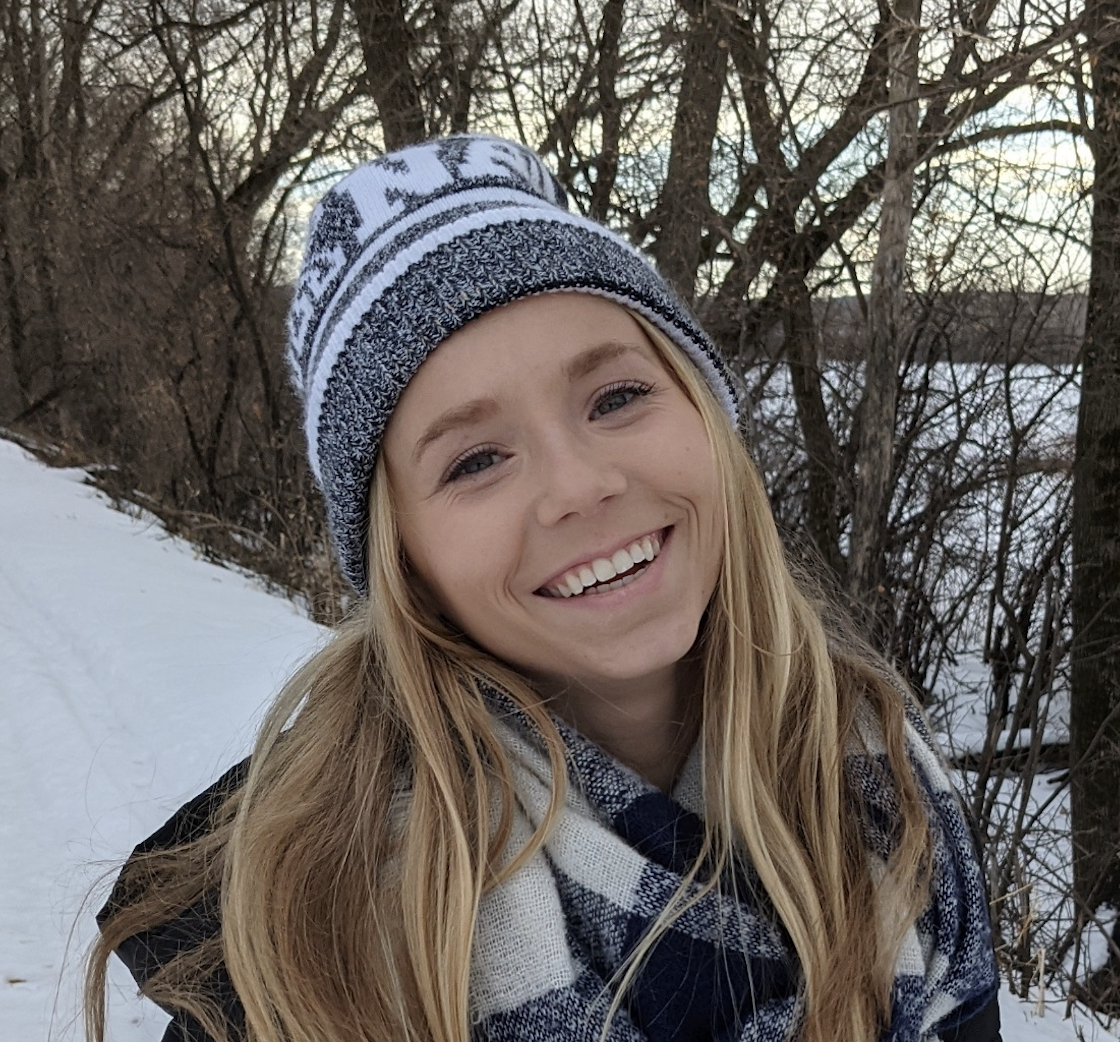
Nicole Neumann - Bachelors in Physics, 2021
Nicole graduated in Spring 2021 and is currently engaged in post-baccalaureate research at UC-San Diego. Read more about her experience.
Full Story + Show Less –Nicole graduated in 2019 with her BS in Physics and moved immediately in physics post-baccalaureate research. Affiliated with with University of California-San Diego, but working with a large research team at University of California-San Diego and Princeton University, Nicole is currently studying various aspects of climate. IN this research, she says her favorite parts are understaning "the real-world impact that comes with understanding our current state, how we got to it, and predicting the changes to come."
One of the most valuable lessons she learned during her time at Minnesota State University was that science is more productive "when we do it together." This drive for collaboration pushed her to network within the field more broadly, ultimately helping her to earn her current research positions.