Recent Program Features
We are proud to celebrate the success of our faculty, students and programs. We welcome you to learn more about our college through reading our recent features!

Raka Paul - Masters in Physics 2019
Raka graduated in 2019, and moved to Sweden to begin a PhD program in physics at Stockholm University. Read more about their experience at Minnesota State University below.
Full Story + Show Less –Raka graduated in 2019 with an MS in Physics, completing a thesis under the supervision of Dr. Dall'Asen. Upon graduation, she moved to Stockholm University where she begin a PhD program in physics studying the properties of dust grains like fullerenes and PAHs which are found in abundance in the universe and essentail for understanding a number of fundamental open questions in astrophysics.
She describes her research at Stockholm as focused on: "...understanding the interaction process and charge transfer mechanism between oppositely charged molecules, at the DESIREE cryogenic facility at Stockholm University’s physics department."
Of her time at Minnesota State University, Raka says "Minnesota State University has been a great catalyst and big leap forward toward achieving my current position. The faculty at Physics department, especially Dr. Brown, Dr. Xu and Dr. Dall’Asén have been the guiding and shaping factors, both in their teaching and mentoring skills. In the span of my masters’ studies, interaction with the faculty, my peer and the general work environment of a TA at the department have all made me a better physicist than when I started."

A Long-Standing Commitment to Student Success
“Addressing food insecurity on campus is a key part in retaining students and helping them be successful when they’re in school,” Svercl says. “What the research points to is that students who are food insecure are often working more hours per week than students who aren’t food insecure, meaning it’s not a lack of effort or a lack of desire to work, but rather there are so many cards stacked against [them]. As the cost of college increases, and now with the pandemic making everything more strained, it becomes more and more difficult than in generations past to maintain and pay for college while also paying for basic needs and finding that consistent balance.”
Full Story + Show Less –In Spring 2018, Carol Glasser, Associate Professor in the Sociology department, taught a Sociology in Action course. She and her students researched food insecurity amongst Minnesota State University, Mankato students. A self-administered, anonymous, online survey was approved by the Office of Research and Sponsored Programs and sent to a random sample of 2,100 students that met the criteria of being undergraduate and full-time students who were enrolled in Spring 2018.
They found that more Minnesota State Mankato students experience food insecurity than the national average. Only 36 percent of students surveyed were food secure, while 40 percent of students experienced high or very high food insecurity. Another 24 percentage of students were experiencing marginal food insecurity issues. Therefore, almost two-thirds of the participating students were experiencing some level of food insecurity.
Students can be considered food insecure if in the last 30 days they experienced the inability to buy groceries, inability to afford balanced meals, cut the size of meals to make groceries last longer, didn’t eat even though they were hungry, lost weight caused by a lack of food availability or didn’t eat for a full day.
As a result of this study, many students, faculty, staff and administrators have been working hard to address issues of food insecurity for students and raise attention to the problem among others on campus and in the community. Kara Svercl, a second-year Social Work major, discovered food insecurity was a large problem last year when she served as a senator in Student Government.
“Addressing food insecurity on campus is a key part in retaining students and helping them be successful when they’re in school,” Svercl says. “What the research points to is that students who are food insecure are often working more hours per week than students who aren’t food insecure, meaning it’s not a lack of effort or a lack of desire to work, but rather there are so many cards stacked against [them]. As the cost of college increases, and now with the pandemic making everything more strained, it becomes more and more difficult than in generations past to maintain and pay for college while also paying for basic needs and finding that consistent balance.”
Svercl found a program called Swipe Out Hunger that works with colleges and universities to implement and amplify a range of anti-hunger programs across campus networks. These programs are sustainable, student-centric, innovative and destigmatizing, to provide students with the resources they need.
In Fall 2020, her hard work paid off when the program was brought to campus. Sodexo, the University’s food services and facilities management company, even donated almost 5,000 meal swipes to get the program off the ground. As the program progresses, students will be able to donate their unused meal swipes for other students to use, without any extra costs.
Students apply for these swipes through a low-barrier online application. When awarded, these meal swipes are loaded onto a student ID, just like dining dollars, so students can eat in the dining facilities on campus without anyone knowing they are using the program. It can restore that sense of just being a student without having the additional stressors caused by food insecurity.
There was an overwhelming response to the program in its first semester, when 387 students were served. In addition to receiving meal swipes, students are referred to a staff member who serves as a case manager role and then follows up with other resources that aid in student hunger.
One of those resources is the newly initiated Maverick Food Pantry. For years, various offices and organizations, including Student Government, Diversity & Inclusion, the Kearney Center for International Student Services and Residential Life, have been working together to open a food pantry on campus. The pantry is even more important now as students are unable to maintain steady work and income as a result of the COVID-19 pandemic.
Located in Carkoski Commons 142, the Maverick Food Pantry is open on Mondays, Wednesdays and Fridays at varying times to provide easy access to students. Any student is able to utilize the resource once a week to obtain a prepackaged box with canned goods, pasta or rice, canned meat, cereal, snacks, butter, milk, eggs, cheese, bread and a fresh meat option. Household and personal care items are also available as needed, including can openers, feminine hygiene products, toothbrushes and toothpaste.
“We are doing everything we can to make it a safe, warm and inviting experience,” says Megan Heutmaker, who is overseeing operations. “We are over in Carkoski, which is kind of tucked away in a corner… so it’s not super obvious what’s going on, but you can see where we are. We try to make the process as quick as possible as well.”
Although neither of these programs can fix the larger issue of food insecurity, they are both working hard to eliminate the stigma surrounding it and serve as contact points to meet the immediate needs of students. As a campus, Minnesota State Mankato has a long-standing commitment to serving the community and focusing on student success. Swipe Out Hunger and the Maverick Food Pantry are prime examples of responsive actions that focus on helping our students succeed.
To support the Maverick Food Pantry, click here.
Unprecedented Creativity
Exactly one year ago, our lives were completely changed as COVID-19 was declared a national pandemic by the World Health Organization (WHO). With the unprecedented times came a need for unprecedented creativity to continue providing access to campus resources for students. Although campus closed, Student Health Services found a way to accommodate student needs.
Full Story + Show Less –Exactly one year ago, our lives were completely changed as COVID-19 was declared a national pandemic by the World Health Organization (WHO). With the unprecedented times came a need for unprecedented creativity to continue providing access to campus resources for students. Although campus closed, Student Health Services found a way to accommodate student needs.
At the time, most of the University was closing, and Student Health Services worked to do what it could to continue to serve students. Dr. Wendy Schuh, director of Student Health Services, now acknowledges, “We had many long, difficult conversations about that…. and did not know nearly as much as we know now. We decided that it’d be important to stay open but needed to do things like separate our well visits from anyone who had COVID symptoms and reconfigure our space to allow for social distancing.”
Student Health Services worked closely with Residential Life and Environmental Health and Safety to find a safe space to open an upper clinic, in Carkoski Commons, to see students and begin testing those with COVID-19 symptoms. A space that once housed administrative offices was renovated; they brought in exam tables, installed a sink, calculated air circulation times needed between testing appointments and were able to get the clinic up and running before students returned to campus for the Fall 2020 semester.
In addition to the upper clinic, Student Health Services found a variety of ways to alter services to meet student needs. Despite low numbers of students living on campus, the clinic still saw more than 3,200 students for more than 7,700 medical visits in 2020.
“Some students need that continuity of care to meet their healthcare needs,” Schuh said.
The different functional areas of Student Health Services worked collaboratively to adjust services to continue to meet student needs. The Medical Clinic remained open for in-person visits but also began offering more virtual appointments through Zoom Health, a HIPAA-compliant meeting tool. The clinic also enabled a secure message feature on Medicat, its medical record system, to provide more open communication between students and providers.
Additionally, a healthcare hotline (507-389-5591) was created and staffed by a nurse or medical provider every weekday from 8 a.m. to 4 p.m. to answer students’ questions about symptoms, testing, isolation and quarantine. They also hired a graduate intern to meet with students, some of whom had never been on campus because of COVID, and connect them with campus resources to aid in their success.
Furthermore, the Pharmacy began sending mail order prescriptions and over-the-counter supplies to students for the first time. Telepsychiatry partners through the Minnesota State Collaborative Partnership were offered this same service to meet the needs of students struggling at other Minnesota State campuses too.
The Office of Student Affairs hired a COVID Case Manager housed in Health Education to help track COVID cases related to the University and serve as a liaison to the Minnesota Department of Health (MDH). Additionally, alcohol and drug sanction education programs moved online to keep students and staff safe, and the Student Health PROs continued to meet virtually to find creative ways to carry on programming and messaging around campus.
As Minnesota State University, Mankato looks to the future and to the realities of a post-COVID society, the University also has to consider what changes to keep. COVID has demonstrated semester after semester just how important Student Health Services is and how lucky the campus is to have such a valuable resource for students.
Even when students come back to campus, online resources will still serve as a way to increase access to services.
“I don’t think telehealth is going anywhere.” Schuh says. “Most people prefer to see their provider in person; it’s just natural to have that in-person relationship. But telehealth can address barriers such as students being out of town, going home for the semester or being under isolation or quarantine. Technology is a vehicle to help us care for our students, which has really pushed us to the next level.”
As the long-term effects of COVID linger on campus, Student Health Services will continue to meet students’ physical and mental needs while they plan for a free-standing, comprehensive facility to expand services within the next 10 years.
Vaccine Clinics for Students
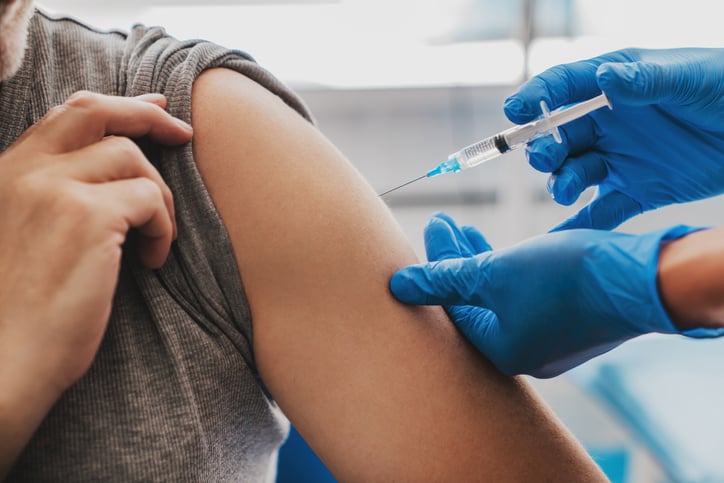
Upcoming private COVID-19 Vaccine Clinics for Minnesota State University, Mankato students and household families (age 16+) on Wednesday, April 21, 2021 and Saturday, April 24, 2021.
Update May 14: information about receiving your second dose.
(+) View Message (-) CloseUPDATE May 14, 2021
It’s critical to receive both doses of the vaccine, unless you received the Johnson & Johnson vaccine. It is not necessary to receive both shots at the same location, but it does need to be the same shot. For more information, visit the Minnesota Department of Health website. If you need assisance finding a vaccination location, please contact Natalie Schuette at natalie.schuette@mnsu.edu.
April 16, 2021
Dear Students,
I am pleased to announce a SECOND and THIRD upcoming private COVID-19 Vaccine Clinics for Minnesota State University, Mankato STUDENTS and HOUSEHOLD FAMILIES (age 16+) on Wednesday, April 21, 2021 and Saturday, April 24, 2021. In partnership with the downtown Hy-Vee Pharmacy, we will have Pfizer 2-dose vaccination clinics on campus, with the second dose administered 21-days after the first (second dose scheduled for May 12 or May 15).
Select one of the Vaccine Clinic options:
Wednesday April 21, 2021
WHO: Students; open to 500 participants
WHAT: Pfizer 2-dose vaccination
WHERE: Centennial Student Union Ballroom
WHEN: 9:00 a.m. to 3:00 p.m.
SIGN-UP
Saturday, April 24, 2021
WHO: Students & Household Families; open to 1,000 participants
WHAT: Pfizer 2-dose vaccination
WHERE: Myers Fieldhouse
WHEN: 9:00 a.m. to 3:00 p.m.
SIGN-UP
What you need for the Vaccination Clinic
When registering through the above link, you will be asked to fill out the consent form for the Hy-Vee Pharmacy requesting your first dose. You will automatically be scheduled for your second dose at the vaccine clinic.
Additionally, you will be asked for a copy of the front and back of the information described below that applies to you (you can upload a photo in the registration form). If you cannot upload a photo, you will need to bring a copy of the front and back of the requested documents to the clinic.
- For those 65 and older, or anyone covered by Medicare, you should include a copy of the front and back of your Medicare red, white and blue card. If this does not apply to your circumstances, then:
- A copy of the front and back of your prescription insurance coverage card (you may have that on your medical card). It will be a card that should note Prescription or “Rx”. Also, it will have “BIN” or “RxBIN” on it. If this does not apply to your circumstances, then:
- A copy of the front and back of your medical coverage card and your driver’s license (or State ID). If this does not apply to your circumstances, then:
- A copy of the front and back of your driver’s license or State ID.
The University will not receive any information regarding students’ or your family’s medical information, nor who chooses to get the vaccine. Neither Minnesota State University, Mankato nor the Minnesota State system require vaccinations of its faculty, staff and students. However, I encourage everyone within our campus community to utilize the expanding array of vaccination avenues to get your vaccination as soon as possible.
Continue to be safe and well.
Sincerely,
Richard Davenport
President